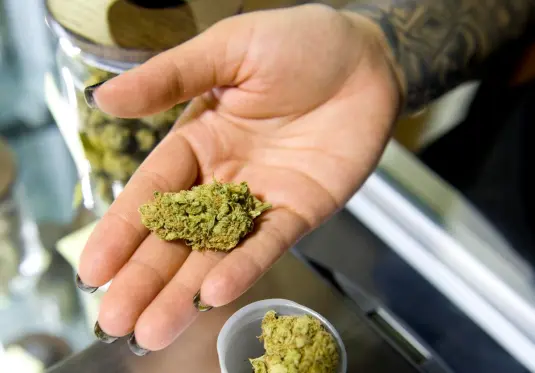
OUTDOOR THCA: WHY SUN-GROWN FLOWER DESERVES A SPOT IN YOUR ROTATION 

Outdoor THCA flower doesn’t always get the respect it deserves. In a market that glorifies indoor cultivation, sun-grown flower often gets overlooked — and that’s a mistake. Outdoor THCA brings natural growing conditions, distinctive terpene profiles, solid potency, and prices that leave plenty of room in your budget. 

How Outdoor THCA Is Grown 

Outdoor cultivation is the original growing method — plants in soil, under the sun, exposed to natural weather cycles. No artificial lighting, no climate-controlled rooms, and far less infrastructure overhead. 

Cannabis plants evolved to thrive under natural sunlight, and the full UV spectrum drives robust cannabinoid and terpene production. Outdoor plants also grow larger, producing bigger yields per plant than their indoor counterparts. 

The tradeoff is less control. Outdoor growers work with the seasons, and weather fluctuations mean each harvest carries more natural variation. But experienced cultivators produce consistently strong flower by working with these conditions, not against them. 

The Flavor Profile: Earthy, Full-Bodied, and Distinct 

Outdoor-grown cannabis develops earthier, more complex terpene profiles influenced by the natural environment. You’ll pick up deeper, fuller-bodied notes — pine, soil, musk, and spice — compared to the cleaner, sharper flavors of indoor flower. 

This isn’t better or worse — it’s a different experience. Many seasoned consumers prefer the depth and character of outdoor flower. The terroir concept that wine enthusiasts talk about applies well to outdoor cannabis — the soil, climate, and natural surroundings all leave their mark on the final product. 

Potency That Holds Its Own 

A common misconception is that outdoor THCA can’t compete with indoor on potency. While indoor growing allows maximum optimization, well-cultivated outdoor flower regularly tests at impressive THCA percentages. 

The potency gap has narrowed significantly as outdoor techniques have improved. Skilled sun-growers using quality genetics and proper soil amendments produce flower that holds up well against indoor options. The difference in THCA percentage might only be a few points — often unnoticeable in practice. 

The Price Advantage of Going Outdoor 

This is where outdoor THCA really shines for budget-conscious buyers. Because outdoor cultivation requires far less infrastructure and energy, the cost of production is dramatically lower than indoor growing. Those savings flow directly to the consumer. 

You can typically find outdoor THCA ounces at 30–50% less than comparable indoor flower. For anyone who consumes regularly, that’s a substantial difference over time. And when you factor in that the potency gap is often minimal, the value equation tips heavily in outdoor’s favor. 

A Great Starting Point for New Buyers 

If you’re new to THCA flower and not sure where to start, outdoor-grown options make an excellent entry point. The lower price allows you to experiment with different strains without a major financial commitment. You get to explore what effects and flavors you enjoy before potentially investing in pricier indoor options down the road. 

Sun-Grown THCA Is the Market’s Best-Kept Value 

Outdoor THCA flower offers a unique combination of natural terpene complexity, respectable potency, and unbeatable pricing. It’s not trying to be indoor flower — it’s its own experience, shaped by sunlight and soil rather than LEDs and climate controllers. For anyone who values flavor, affordability, and a more natural product, outdoor THCA is well worth exploring. 

Thomas L. Kerr

 brian@intltaxcounselors.com  

Related Post

THE INDUSTRIAL-SCALE POTENTIAL: NAVIGATING THE 2026 MARKET FOR THCA HASH BULK THE INDUSTRIAL-SCALE POTENTIAL: NAVIGATING THE 2026 MARKET FOR THCA HASH BULK 

As we progress through the second quarter of 2026, the cannabis concentrate sector has matured into a sophisticated, high-volume industry. While artisanal small-batch products still command a premium, the real engine of the current economy is found in the distribution of Buy THCA Rosin Here. This specialized wholesale market caters to high-volume manufacturers, retail chains, and extraction labs seeking a clean, potent, and versatile raw material. However, the 2026 landscape is no longer just about volume; it is defined by a rigorous new federal framework that requires bulk buyers to be more diligent than ever before. 

Defining the Bulk Standard: Solventless Purity at Scale 

The primary appeal of THCA hash bulk in 2026 remains its “solventless” nature. Unlike hydrocarbon extracts (BHO/PHO) that use butane or propane, hash is produced through mechanical separation. For bulk buyers, this is a strategic choice: it eliminates the risk of residual solvent contamination and appeals to the 2026 “clean label” consumer who prioritizes organic-equivalent processing. 

Industrial-scale hash production has evolved significantly this year. Leading facilities now utilize: 

  • Automated Ice-Water Systems: These stainless steel “wash plants” can process up to 500 pounds of fresh-frozen biomass in a single cycle, using precise agitation settings to isolate specific micron-sized trichome heads without damaging the delicate THCA crystals. 
  • Large-Scale Freeze Drying: To prevent the oxidation and browning common in traditional hash, bulk producers use commercial-grade freeze dryers. This preserves the light, sandy texture and golden hue that indicates high-quality, unadulterated THCA. 
  • Mechanical Sifting Technology: For dry-sift bulk operations, vibratory sieves with laser-cut screens ensure that only the purest resin glands make it into the final “melt,” resulting in a high-potency product that tests between 60% and 80% THCA. 

Navigating the November 2026 Federal Deadline 

The most critical factor for anyone dealing in THCA hash bulk today is the “strategic runway” established by H.R. 5371. While the 2018 Farm Bill allowed for a flexible definition of hemp, the new 2026 federal provisions have introduced a “Total THC” cap that specifically includes THCA. 

Bulk purchasers must now prepare for the November 12, 2026, enforcement deadline. Currently, bulk hash is still being traded as a compliant hemp derivative in many jurisdictions, provided the Delta-9 THC remains below 0.3%. However, the new law will impose a strict 0.4mg total THC limit per final container. This is shifting the bulk market toward “Post-November Planning,” where hash is increasingly being funneled into state-licensed medical or adult-use channels where it can be legally activated and sold as a high-THC product

Quality Control and Compliance in 2026 

In the 2026 wholesale environment, “blind buying” has been replaced by data-driven procurement. When sourcing THCA hash bulk, industry professionals utilize a specific verification stack: 

  1. Full-Panel COAs: In addition to potency, bulk lots must be screened for heavy metals, microbials, and mycotoxins. In 2026, these lab results are verified via blockchain-linked QR codes to prevent certificate tampering. 
  1. Micron Specificity: Bulk hash is often sold by “grade.” “Full-melt” (typically 70u–120u) is sought for its dabbing potential, while “food grade” or “extraction grade” (below 45u or above 160u) is purchased in massive quantities for the production of infused pre-rolls and edibles. 
  1. Temperature-Controlled Logistics: Because THCA is sensitive to heat, bulk shipments are now moved exclusively through “cold-chain” logistics. Maintaining a steady 40°F (4°C) or lower during transit prevents the hash from “greasing” or prematurely decarboxylating into Delta-9 THC, which would render the shipment non-compliant. 

By leveraging these industrial-scale technologies and adhering to the strict 2026 compliance standards, the THCA hash bulk market provides the essential foundation for the most potent and pure products in the modern cannabis era. 

Thomas L. Kerr

 brian@intltaxcounselors.com  

THE RISE OF DELTA 9 DRINKS: A NEW ERA OF SOCIAL CONSUMPTION THE RISE OF DELTA 9 DRINKS: A NEW ERA OF SOCIAL CONSUMPTION 

The landscape of botanical consumption is continually evolving, and among the most exciting innovations to emerge are Delta 9 drinks. These infused beverages represent a significant shift from traditional methods, offering a discreet, socially acceptable, and often faster-acting alternative to smoking or edibles Buy THCA Rosin from Primary Jane. As legal frameworks expand and consumer preferences diversify, Delta 9 drinks are carving out a unique space, appealing to those seeking a novel and controlled way to experience the effects of the plant. 

What Exactly Are Delta 9 Drinks? 

Delta 9 drinks are beverages infused with Delta-9-tetrahydrocannabinol (Delta 9 THC), the primary psychoactive compound found in cannabis. Unlike traditional edibles that rely on oil-based infusions and digestion, these drinks typically use nanoemulsion technology. This advanced process breaks down the THC molecules into incredibly tiny, water-soluble particles. 

This nanoemulsification is key to their unique consumer experience: 

  • Faster Onset: Because the THC particles are water-soluble and much smaller, they are absorbed more rapidly into the bloodstream through the mucous membranes in the mouth and throat, and more efficiently in the digestive tract. This can lead to effects being felt in as little as 10-20 minutes, a stark contrast to the 45-90 minutes or more required for traditional edibles. 
  • Predictable Experience: The faster absorption also often translates to a more predictable and controllable experience. Users can sip slowly and gauge the effects, reducing the risk of overconsumption that can sometimes occur with slower-acting products. 
  • Discreet Consumption: Packaged like conventional sparkling waters, sodas, or teas, Delta 9 drinks offer an unparalleled level of discretion. They blend seamlessly into social settings, allowing users to partake without drawing unwanted attention. 

The Appeal of a Social Beverage 

The social aspect is a major driver behind the burgeoning popularity of Delta 9 drinks. For many, the ritual of sharing a drink with friends is ingrained in social culture. These infused beverages offer an alternative to alcohol for those looking to reduce their intake or simply explore different avenues for relaxation and enjoyment. 

  • Moderation and Microdosing: Many Delta 9 drinks are formulated with relatively low doses of THC (e.g., 2mg, 5mg, or 10mg per can). This encourages responsible microdosing, allowing individuals to achieve a mild, manageable buzz without overwhelming effects. This is particularly appealing to casual users or those new to THC. 
  • Variety of Flavors: Just like traditional beverages, Delta 9 drinks come in a wide array of flavors – from refreshing fruit infusions to classic soda profiles – making them an enjoyable taste experience as well as an infused one. 
  • Inclusivity: They offer a smoke-free, discreet, and palatable option for those who may not enjoy smoking, vaping, or the texture of traditional edibles. 

Navigating the Legal Landscape 

The legality of Delta 9 drinks can be complex, often hinging on federal and state regulations surrounding hemp and cannabis. In many regions, products derived from hemp that contain less than 0.3% Delta 9 THC by dry weight are considered federally compliant. This loophole has allowed many manufacturers to create beverages that contain substantial amounts of Delta 9 THC per serving while technically adhering to the hemp definition. 

However, state-specific laws vary widely. Consumers interested in Delta 9 drinks should always research the regulations in their particular jurisdiction to ensure they are making legal and informed purchases. 

Important Considerations for Consumers 

While Delta 9 drinks offer numerous advantages, responsible consumption is paramount: 

  • Start Low, Go Slow: Even with faster onset, it’s always advisable to begin with a low dose, especially if you are new to THC or a particular product. Give the drink at least 20-30 minutes before considering consuming more. 
  • Read Labels Carefully: Always check the dosage per serving (e.g., per can or bottle) and the total THC content. 
  • Understand Your Tolerance: Individual responses to THC can vary significantly based on metabolism, body weight, and prior experience. 
  • Avoid Mixing: Do not mix Delta 9 drinks with alcohol or other substances, as this can amplify effects in unpredictable ways. 
  • Source Reputably: Purchase from manufacturers who provide transparent third-party lab testing (Certificates of Analysis) for potency and purity, ensuring the product is free from contaminants. 

The Future is Liquid 

Delta 9 drinks are more than just a passing trend; they represent a significant step forward in the normalization and diversification of botanical consumption. By offering a clean, refreshing, and precisely dosed experience with a rapid onset, they are poised to become a staple in social gatherings and personal wellness routines for many, ushering in a new era for how people choose to unwind and enjoy. 

Thomas L. Kerr

 brian@intltaxcounselors.com  

Cannabis edibles vs smoking effectsCannabis edibles vs smoking effects

This article gives the meaning of cannabis components, side effects, and a few benefits of the substance, and some medical benefits

Cannabis is a compound of THC which is the main psychoactive mixture in cannabis that produces a high sensation and CBD which is one of 113 recognized cannabinoids in cannabis plants, along with tetrahydrocannabinol, and records for up to 40% of the plant extract.


Impacts Cannabis edibles and smoking effects.

Cannabis is a compound of THC and CBD. Both compounds interact with your body’s endocannabinoid system, but they have different effects.

THC is the tetrahydrocannabinol while CBD is the cannabidiol.

The substance is extracted from the plant of Cannabis Sativa.


Components of the substance.

Chemical structure. It has a  molecular structure: 21 carbon atoms, 30 hydrogen atoms, 2 oxygen atoms. A slight difference in how the atoms are arranged records for the differing effects on your body.

Its compounds are chemically similar to your body’s endocannabinoids. This enables them to come together with your cannabinoid receptors.

Psychoactive components. Although the compounds of cannabis have identical chemical structures, both don’t have the same psychoactive effects. 

Legality. Some states have made the drug legal. In line with that, before you buy the substance, it is important to research your state’s laws.


Benefits of the products

Medical benefits. The substance has many medicine fits, it can provide relief from several of the same conditions

The substance helps relieve anxiety, depression, nausea, and inflammation.

Drug testing. The substance is stored in the body’s fat. It can appear on drug tests for many days or weeks after you consume them.


Smoking effects

  • Increased heart rate. The heart is pumping under higher pressure than the normal rate.
  • Coordination problem in body parts. Majorly brain coordination and other body parts. 
  • Appetite changes. Appetite can decrease.
  • Weight loss. Reduction in body weight due to challenges like malnutrition.
  • Fatigue. Being tired and joint pains.
  • Memory loss. Unable to think properly.
  • Anxiety
  • Can lead to insanity.
  • Red eyes.
  • Slower reaction times- Slow metabolism reactions in the body.

These substances cause serious health problems in the user’s body that at times may be expensive to treat. Gaining a normal and stable immune system may be a big challenge to one’s health if the effects persevere for long. Some effects may cause some complications like high blood pressure which is a serious case to deal with.


In conclusion, above are the Cannabis edibles vs smoking effects

One should weigh the challenges and benefits before making a decision to purchase the substance. Some of the challenges can cause serious health complications and issues. To be on the safe side, ensure you consult with your doctor on the possible effects on the cannabis on your health.

Thomas L. Kerr


 brian@intltaxcounselors.com